

After a decade of exuberant promises, artificial intelligence is entering a more sober, consequential phase.
The coming year will not be defined by bigger models or bolder claims but by whether organizations can turn AI into something dependable, governed and economically meaningful.
Across infrastructure, data readiness, automation, skills and regulation, executives are bracing for a period of consolidation and reckoning, as poorly integrated tools fall away and proven use cases take center stage.
From agentic architectures and inference-ready platforms to human-in-the-loop design and sovereign AI, 2026 looks set to reward those that prioritize execution over experimentation.
From AI hype to AI reality
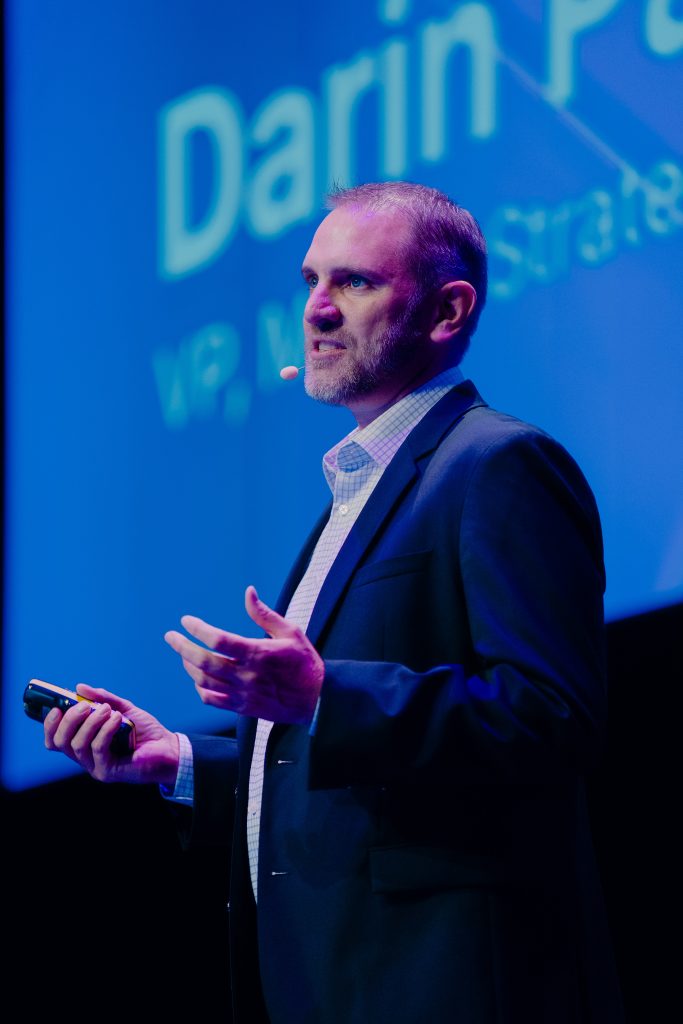
Darin Patterson, VP of Market Strategy, Make
“In 2026, the winners will be those using AI that delivers practical, connected automation with measurable outcomes. Standalone ‘AI chatbots’ that don’t take action will fade. Complexity is out; seamless, scalable impact is in.”
Martin Reynolds, Field CTO, Harness
“2026 will be the year generative AI shifts from hype to measurable impact, but only for organizations that adopt it purposefully. The rush to apply AI everywhere delivered limited returns. The focus will move from flashy pilots to purposeful back-office use cases.”
Tony Gentilcore, Cofounder, Engineering, Glean
“2026 marks the start of natural selection for automation. Tools that create noise instead of value will go extinct. Evolution now favors ROI.”

Vishwanath T R, Cofounder and CTO, Glean
“The biggest shift won’t be an AI winter, it’ll be a reckoning. The next wave of value isn’t locked behind AGI; it’s in mastering the tools we already have.”
No foundation, no future
Fred Lherault, Field CTO EMEA/METCA, Pure Storage
“The switch in focus from training to inference means that without a robust inference platform, and the ability to get data ready for AI pipelines, organizations are set to fail. As inference workloads become part of production, infrastructure must support availability, security and non-disruptive operations.”
“Getting data AI-ready requires ingestion, curation, transformation, vectorization, indexing and serving. Organizations will focus on streamlining and automating the whole data pipeline.”
David Fischer, Chief Sales Officer, Luware
“Cloud platforms are entering a new era of adaptive, AI-powered infrastructure, capable of learning, predicting and optimizing themselves in real time.”
Puneet Gupta, VP and GM, NetApp UK
“AI-driven cybersecurity tools are no longer experimental, but essential. Cybersecurity will evolve into a self-healing capability embedded within intelligent data infrastructure.”

From chatbots to coworkers
Darin Patterson, Make
“Three maturing technologies will underpin the AI shift: Model Context Protocol will undergo significant maturation; Agent2Agent will move from theory to widespread adoption; and automation will move from chat interfaces to operations that run autonomously, involving humans only when necessary.”
Rob Mason, CTO, Applause
“AI fatigue will set in as companies pull back on new AI services. Model Context Protocol will become all-pervasive in 2026, but customer-facing AI agents will be thin on the ground.”
Adonis Celestine, Senior Director and Automation Practice Lead, Applause
“Dated processes will hamper the rollout of agentic AI, and LLMs will need tightening up in 2026.”

Neil Sholay, VP of AI, Oracle
“By mid-2026, the question won’t be whether enterprises should embed AI agents in business processes — it will be what they’re waiting for if they haven’t already.”
“We’re seeing the first wave of natively embedded agents across finance, HR, supply chain and customer experience. These agents live directly within workflows where work happens.”
Humans aren’t optional
Pri Nagashima, VP of Data, Analytics and AI, Pleo
“In 2026, the winners will use AI to scale human judgment, not replace it. Human-in-the-loop isn’t a nice to have anymore; it’s foundational architecture now.”
“The real demand is for AI quality engineers — people who can verify outputs, catch hallucinations and spot when the model is confidently wrong.”
Paul Done, Head of Modernization, MongoDB
“The current euphoria over vibe coding will soon end. People are realizing they can’t build their business on sloppy, insecure code.”
“Developers still own the flow, but AI makes it faster and smarter.”
Ev Konstevoy, CEO, Teleport
“We face a shortage of highly skilled, AI-native talent. Every CEO should be worried about recruiting and training these AI operators.”
Talk to the machine
Paul Sephton, Global Head of Brand Communications, Jabra
“In 2026, we won’t just be talking about AI – we’ll be talking to it. Already, 14% of knowledge workers prefer speaking to their AI tools.”
“Workers were 33% more confident in AI responses when they spoke aloud.”
Gareth Cummings, CEO, eDesk
“In 2026, AI will stop sitting behind customer experience and will become the experience itself.”
Governments get serious
Harqs Singh, CTO, InfraPartners
“Sovereign AI is no longer theoretical. The real bottleneck is deploying high-density, power-intensive AI data centers quickly and sustainably.”
“Governments must act in 2026. Sovereign AI cannot exist without sovereign infrastructure.”
Denas Grybauskas, Chief Governance and Strategy Officer, Oxylabs
“In US law, we will see growing emphasis on whether using content for AI training is transformative enough to count as fair use.”
“In jurisdictions such as the EU, the industry will need mechanisms for credit attribution and workable ways to remunerate creators.”
Jérémy Grinbaum, VP South EMEA, Amplitude
“By the end of 2026, European companies will move away from fragmented AI tools, converging on a single platform managing data, compliance and performance.”
What AI does to our brains
David Higgins, Field CTO, CyberArk
“Widespread use of AI-driven information tools will erode critical thinking skills, creating fertile ground for misinformation and social engineering.”
Nick Hill, Practice Lead, TXP
“The risk of cognitive overload is real. AI generates vast amounts of data, yet the human brain isn’t designed to process information at that speed.”
Emrecan Dogan, Head of Product, Glean
“AI is making it effortless to create, but dulling the creative muscle. ‘Human-made’ will become the new luxury label.”
When everyone has AI, what’s left?
Ben Peters, CEO and Cofounder, Cogna
“The survivors won’t be those who built the largest infrastructure, but those who packaged AI into workflows addressing specific, high-value problems.”
“Durability comes down to solving the last 10%: the edge cases and domain-specific requirements.”