
MongoDB’s Melissa Plunkett on why AI needs better context — not just better models
The VP of product on MCP servers, legacy data modernization and what her English degree taught her about building for developers
As vice president of product at MongoDB, Melissa Plunkett is responsible for shaping how one of the world’s most widely used database platforms serves its developer community — from first-time users to teams running applications at global scale.
It’s a role that puts her at the intersection of two forces reshaping enterprise technology: the race to make data AI-ready and the challenge of dragging legacy systems into the modern era.
Her path to that intersection was anything but conventional.
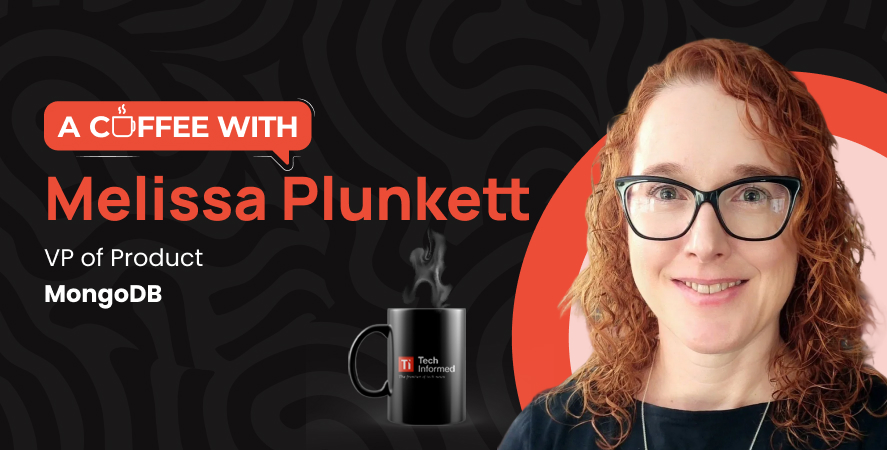
Over a matcha latte, Plunkett talks about the realities of building developer-first products in an AI-driven world. From her route into technology via an English degree and early internet experimentation to MongoDB’s role in helping organizations modernize legacy systems and prepare data for AI, she reflects on speed, context and why diverse perspectives are essential for better decision-making.
What do you do at MongoDB?
I’m vice president of product. My team and I help decide what our customers need, and how we enable them to succeed. We’re very developer-focused, which means helping developers from the moment someone first tries MongoDB all the way through to running production applications at scale.
Every step of that journey should be as friction-free, intuitive and, honestly, as delightful as possible.
How did you get here?
It’s an unusual and long story. I started out in tech as an engineer, then moved into system administration, which people now call SRE [site reliability engineering] or DevOps, running production systems. From there, I went into solution architecture, working hands-on with customers across security, hosting and cloud management.
Eventually, I wanted to do something different. I’d worked with MongoDB for years and loved the product. Some friends recruited me to join, but I told them I’d only do it if I could move into product when the opportunity came up. I joined as a solution architect, worked closely with customers and sellers, and about a year and a half later a product role opened up.
It’s been quite a ride ever since. Being on the product side means you’re not just using products, you’re shaping them. And that’s been fantastic.
Do you have a favorite product?
That’s like choosing a favorite child. But I’m especially drawn to anything that helps developers move faster. Ten years ago, you could sit on an idea for a year or two. Now, if you don’t move quickly, the market passes you by.
That’s why I’m fascinated by what’s happening in AI right now. One really exciting development is the Model Context Protocol (MCP) proposed by Anthropic. In simple terms, it allows large language models to actually do things — query a database, explore schemas, take action.
We launched our own MCP server, which lets developers ask questions like, “What’s in this collection?” or “How many records do I have?” directly from their development environment. Before, they’d have to leave their environment, log into other systems, check documentation — which is boring.
Now it’s all right where they work, which lets people move faster.
That really reflects what’s happening more broadly, doesn’t it?
Yeah. Early on with the internet, people talked about a homepage where you’d do everything. That idea faded, but now we’re coming back to more centralized places where you can do a lot without constant context switching. Humans aren’t great at multitasking, so bringing information together is incredibly powerful.
How is MongoDB helping organizations prepare their data for AI?
We’re in a fortunate position, because MongoDB was essentially built for this moment. The lingua franca of AI is JSON-style documents — flexible, structured data — and that’s exactly what MongoDB is designed for.
A big challenge with AI is hallucinations, which really come down to lack of context. Humans do the same thing: if we don’t have enough information, we guess, and we’re often wrong. The solution is better context.
That’s where vector databases and embeddings come in. We’ve built vector search directly into MongoDB, and in early 2025 we acquired Voyage AI, which develops embedding models. Bringing all of that together on one platform helps customers give their AI systems rich, high-quality context, which leads to far more accurate results.
That level of precision is critical, especially as AI moves into regulated industries like banking and insurance.
Where should organizations start if they feel overwhelmed by their data?
Modernization. So many companies want to move forward, but their data is trapped in old, brittle, sometimes end-of-life systems. The people who built those systems may have retired years ago.
We realized this was such a widespread problem that we needed to tackle it directly. That’s why we built an AI-powered modernization product that helps customers migrate from legacy systems into modern, flexible databases.
One example is Bendigo Bank in Australia — we helped them reduce development time for a core banking application by up to 90%.
You mentioned your route into tech was unusual. What’s the story?
My first degree was in English. I was going to be a literature professor. I love reading, I always tried to top the library reading lists as a kid.
Then the internet arrived, and I discovered hypertext theory. I realized this was a whole new way of sharing stories and information. At the same time, I saw how long the academic path would be — master’s, Ph.D. — and decided it wasn’t for me.
I started making webpages, fell in with a group of very good “ethical hackers,” learned Linux and got deep into open-source software. That led to a job at the University of Missouri, working on bringing the early internet into education. It was still about information and storytelling, just in a different form.
Do you still read as much now?
Yes. I’m almost through all of Terry Pratchett’s “Discworld” novels. I also recently read “The Memory Police” by Yoko Ogawa — a beautiful, dystopian sci-fi novel. Highly recommended.
How do you use AI personally?
I use Superhuman for email. It’s incredible for getting to inbox zero. I use NotebookLM to organize research and ask questions across large document sets. And I use Gemini to help me tighten my writing. With my English degree, I think I write too much; sometimes in business writing, you need to shrink that messaging down.
What did you think of ‘vibe coding’ being named Collins Dictionary word of the year in 2025?
Not shocked. It’s everywhere. We’ve even done videos showing developers coding entire applications in casual settings. It’s a huge change, and it’s fun to see something so technical hit the mainstream.
Finally, why does inclusivity matter so much in tech leadership?
Groups with different perspectives make better decisions. If your leadership team doesn’t look like your customers, how can you know what your customers want?
Gender is one perspective, but so are culture, experience and background. Bringing that variety together leads to better products and better outcomes. I strive to build teams that reflect the diversity of our developers, so people feel seen and supported.
How do you take your coffee?
I’m a matcha person, with a little bit of oat milk, or a full latte.