
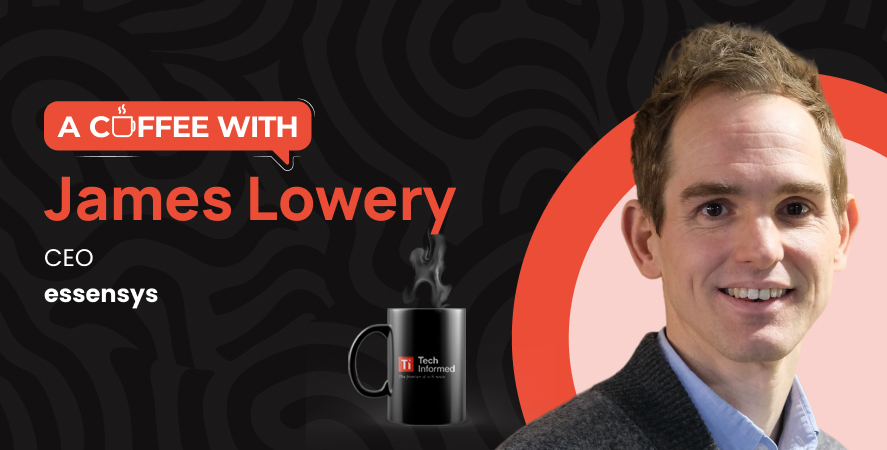
James Lowery: Designing the future of flexible work
The CEO of essensys on why the modern office must earn people’s presence — and the role technology plays in making flexible workspaces profitable
James Lowery has spent his career shaping how people experience the built environment — first as a civil engineer designing schools and offices, then in real estate investment and later cofounding British Land’s flexible workspace brand, Storey.
Now, as CEO of essensys, a technology company that builds digital infrastructure and software platforms for flexible workspaces, multitenant offices and coworking operators, he’s focused on turning the modern office into something people actually choose to visit.
That shift — from obligation to experience — is reshaping the economics of flexible workspaces.
Over coffee, Lowery talks about customer-first leadership, the technology gap holding traditional landlords back and why the office’s survival depends on design and culture as much as connectivity.
You stepped into the CEO role at essensys in 2025. What were your first priorities, and how have you approached setting the direction for the next chapter?
My first priority has always been ensuring that everything we do as an organization directly supports our customers — whether that’s enhancing the end-user experience to improve retention, or helping them unlock new revenue opportunities. As companies scale and evolve, it’s easy to lose sight of what truly matters. For me, clarity, simplicity and an unwavering focus on the customer are essential to sustained success.
What was your career like leading up to this role?
I started out as a civil and environmental engineer, and I’ve always been drawn to the built environment. That interest has taken me through a wide range of roles: designing schools and offices, working in real estate investment, building and scaling a flexible workspace business and now leading a technology company focused on the same industry. Every stage has built on the one before it, giving me new challenges, fresh insights and continuous opportunities to learn.
How do you personally think about the role of the office today?
The world of work has changed, and flexible workspaces have changed with it. The office has to evolve from a place you have to go to a place you actually want to go. Its job is to facilitate collaboration, culture and connection — things that remote tools alone can’t replicate.
Technology is what makes that experience seamless. When every interaction is simple, from booking a meeting room to accessing Wi-Fi, the office becomes more than a building. It becomes a productivity engine, a differentiator and a reason for people to come together.
Many real estate companies are still navigating the cultural shift toward digital-first operations. What have you learned about helping traditional property players embrace new technology successfully?
Our biggest lesson is that technology only delivers value when people actually use it. Traditional operators are often weighed down by legacy systems and siloed tools; they’re expensive, fragmented and frustrating to use.
What we’ve learned is that new technology has to be intuitive and user-centric, and it has to deliver clear benefits. The key is showing operators that technology isn’t just an operational tool; it’s a strategic advantage. When it enhances the digital experience and the bottom line, adoption happens naturally.
How do you take your coffee?
At home with my family, enjoying a good breakfast, looking out onto nature. That’s how I like my coffee. It’s the perfect start to the day — especially at the weekend, when I get to slow down and enjoy a second coffee!