
Is the tech industry’s rental model out of control?
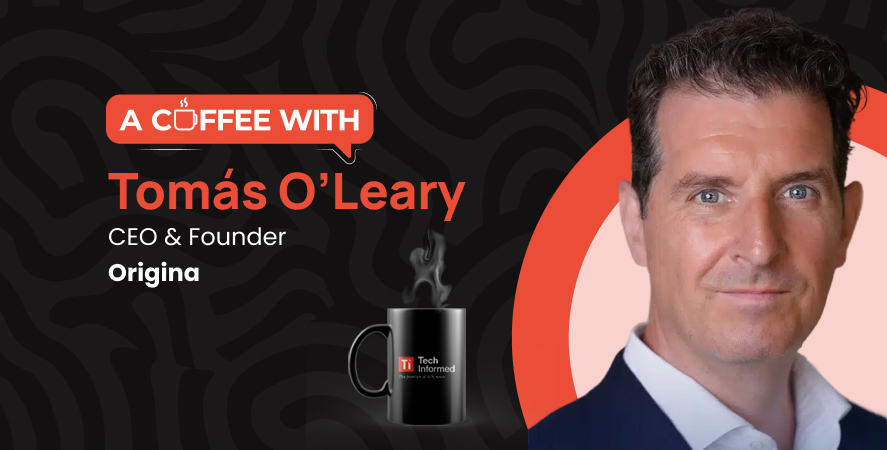
Tomás O’Leary, founder and CEO of Origina, explains why enterprise software licensing costs keep climbing — and what IT leaders can do to push back
Tomás O’Leary is an entrepreneur and technology industry advocate who has spent the last three decades challenging the way enterprise software is bought, sold and supported.
After building a career across IBM and its partner ecosystem, O’Leary founded independent software support company Origina. He is also president of Free ICT, a Netherlands-based lobbying organization pushing back against what it sees as an increasingly one-sided tech industry.
From student beer promotions to boardrooms in Brussels and Washington, O’Leary discusses empowering organizations to take control of their IT ecosystems.
What has your career looked like, leading up to where you are now?
I went to Trinity College in Dublin and did a business degree. I wasn’t very academic, but I was very entrepreneurial. I ran my first business at university — it was called the Tom and Gerry Beer Balls. It was a place you could go, dress up and get a drink. That simple model. I happened to be Tom, and I had a buddy called Gerry, so it was kind of an easy first introduction to marketing.
There was also an operational side: how do you make sure there’s enough drink for everybody, especially when they’re students? You can imagine the scrum as 19-, 20-, 21-year-olds are scrambling to get it. So that was my first phase of business.
I left Ireland in the early 90s — there was no work here. It’s not like the country it is today. I went to Paris, spoke French and ended up working in the travel industry, which exposed me to technology. The company I worked for, GTA [acquired by Hotelbeds Group in 2017], allowed young people to really get into the business and just try stuff, which was great.
I came back to Ireland in my mid-20s and joined IBM. After about two and a half years, I found myself increasingly pushing business toward partners, so at 27 I left and became a partner myself. That ran for the next 12 or 13 years. Then the model changed, the industry was changing, and we became an independent player back in 2012. That’s when I developed the concept of independent software support — and that’s how I ended up in the business I’m in now.
What pushed you toward independent software support?
I’m kind of a rebel. If I see something that doesn’t look right, I can’t ignore it — it’s a natural entrepreneurial instinct.
What drove me toward independent support was what I was seeing on the ground. As a partner, we’d collect, say, £100,000 and pass £96,000 or £98,000 onto IBM or whoever, taking a small margin for selling the contract. But then customers often wouldn’t really use those contracts. Or even if they did, the service was pretty poor. I kept asking: why are you spending all this money?
I also had a personal crisis — I almost lost the business. At the time it felt devastating, but coming out the other side made me much stronger. It gave me the clarity to find what I actually wanted to do: help change the industry. Specifically, to challenge this idea that customers should be forced into unnecessary changes, or into models where they’re paying a lot and getting poor service in return.
How has AI changed things for your business?
AI is an emerging technology, and while it’s dominating every conversation, in terms of overall spend, it’s still a relatively small part of the industry.
And a lot of what’s being labeled AI spend today is companies repackaging existing products. There’s a lot of creative accounting happening.
That said, I do see real opportunity. It can help businesses like mine get information to people faster. I don’t see it as a tool for reducing headcount; I see it as a way to make people even better than they currently are.
What concerns me is that many of the big players are using AI to reinforce the same rental model that already exists in enterprise software.
They want to rent you tokens, rent you compute, rent you intelligence. And a very small number of very well-backed companies are consolidating enormous power. Big companies are not good at being nimble and reactive. The pirates — the smaller, faster-moving organizations — will find the gaps. We see it in every emerging industry. It’s always overhyped and underdelivers initially, but then it delivers in the long run.
Has AI changed how your customers approach you?
It has, insofar as customers, particularly CEOs, CFOs and forward-thinking CIOs, are starting to connect the dots between the cloud and subscription models they’re already locked into and the AI models now being offered on the same terms.
The question they’re asking is: if AI is going to start making decisions for our business, do we really want all that IP sitting on someone else’s infrastructure, under someone else’s control? That conversation becomes a bit like, hang on a second, maybe there’s a better way of doing this.
What’s the motivation behind Free ICT?
I got involved in Free ICT back in 2014. As I said, there’s a bit of a rebel in me, and I saw it as an opportunity to bring together other rebels who were trying to solve problems in the industry.
Back then, the pushback against Big Tech that’s much more mainstream today was only beginning to emerge in small pockets, primarily in enterprise software and data center repair businesses, where vendors were starting to restrict independent players from getting access. So I saw it as an opportunity to get organized. We set up the organization in Brussels in 2014, and I’ve been president for the last four years or so. About two and a half years ago, we also helped set up a sister organization in the United States, which is still finding its feet.
The mission is to talk to legislators and bodies in Brussels and Washington and point out some of the challenges in the industry. One of our core arguments is around the rental model. Legislators sometimes feel that if rental is the dominant model, they can simply regulate it. I’m not convinced they can move fast enough to keep pace with these businesses.
You need a functioning market alongside regulation, meaning customers should be able to both buy and rent. Once you remove the option to buy and it becomes predominantly rental, you need far more robust rules around that.
What differences have you found between the US and Europe?
Honestly, the underlying challenge is the same; you just have to frame it differently.
In Europe over the last decade, the focus has shifted from the environmental impact of technology toward digital sovereignty and geopolitical risk.
In the US, with the two-party system, you have to be conscious of bipartisan engagement. But when you turn up in Congress or the Senate and meet the teams, whether you’re talking to a Democrat or a Republican, it’s the same challenge.
For Republicans, you frame it around competitiveness and jobs — some of these vendor models drain resources from companies and make it harder for American industries to compete, and increasingly, the jobs they create aren’t even in America. On the other side, you can make the environmental case. You tailor the argument, but the underlying problem is identical. That’s the nature of engagement with legislators.
What are your priorities for this year?
Two main ones. First, continued growth, but the right kind of growth. We need to be engaging more senior business leaders, because when we do, those relationships become stickier. You can’t change an industry if you’re too small to be relevant, so scale matters.
Second, and this is close to my heart: changing the way IT companies deliver service. The experience of technology support is, across the board, pretty poor.
When something goes wrong, you’re often expected to fix it yourself. When you do reach support, it’s hard to access and clearly optimized for the provider’s efficiency rather than your experience.
We’ve deliberately avoided outside investment because we knew it would change how we operate. We want to bring genuine personality to service delivery. At the moment we’re sending handwritten notes, cookies from local shops, small personal touches that just don’t happen in this industry. We even sent a miniature lawnmower to a government client with a message about cutting costs.
We’ve also brought in someone who ran a successful hospitality business to lead our global service operation. The hospitality industry is really the only one that has consistently understood the service model. We want to bring that mindset into enterprise tech.