
The 54th World Economic Forum (WEF) took place last week in Davos, Switzerland, under the theme of ‘Rebuilding Trust’. Amidst a backdrop of global conflict, the relentless pace of technological advancement, and the existential threat of climate change, the forum’s agenda was both a response to immediate crises and a forward-looking blueprint for a more collaborative future.
Speaking at the forum, UN Secretary-General António Guterres called for reformed and inclusive global governance to address international divides that are hindering responses to existential threats, such as climate change.
“We can’t build a future for our grandchildren with a system built for our grandparents,” he said.
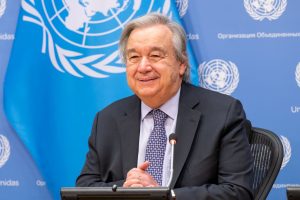
UN Secretary-General António Guterres
US Secretary of State Antony Blinken and European Commission President Ursula von der Leyen were among the voices calling for global cooperation, with von der Leyen emphasising Europe’s pivotal role in shaping a global response to these challenges.
“The sobering reality is that we are once again competing more intensely across countries than we have in several decades. This makes the theme of this year’s Davos meeting even more relevant,” she said. “This is not a time for conflicts of polarisation. This is a time to build trust. This is a time to drive global collaboration more than ever before.”
1: The global conflict landscape
With the war in Ukraine entering its third year, and conflicts in the middle east escalating, the forum discussed a collective urgency to address fractures in international relations.
Ukrainian president Volodymyr Zelenskyy made his first appearance at Davos since Russia first launched its full-scale invasion of Ukraine in February 2022. He delivered an impassioned please for decisive action on frozen Russian assets that could be used to support his country’s defence efforts.
“Regimes like [Putin’s] exist so long as they wage wars. And we, all of us in the free world, only exist as long as we defend ourselves.” Zelenskyy said. “If anyone thinks this is only about us, this is only about Ukraine, they are fundamentally mistaken.”
His first visit to Davos since the onset of the war, Zelenskyy’s stark reminder that the free world’s existence is predicated on its defence capabilities underscored the interconnected nature of global security.
Conflict in Israel and Gaza was also highlighted Israeli President Isaac Herzog advocating for the release of Israeli hostages and the continuation of support from the international community following the attacks by Hamas on October 7.
His appeal for the normalisation process with Arab neighbours to be ongoing was a poignant reminder of the enduring tensions in the Middle East.
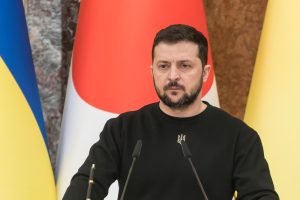
Ukrainian president Volodymyr Zelenskyy
“Key to the ability to exit from the war into a new horizon,” Herzog stressed, is fostering regional cooperation — a sentiment echoed by Mohammad Mustafa, Chairman of the Palestine Investment Fund, who called for a dual approach of humanitarian aid and political resolution at Davos the day before.
2: Artificial Intelligence: progress and prudence
The forum’s discussions on internation co-operation were underscored by wider debate over the future of artificial intelligence and the role it could play in global defence.
During the panel “Generative AI: Steam Engine of the Fourth Industrial Revolution?”, the transformative potential of AI was a central theme, particularly in the realms of national defence and economic growth.
US Senator Mike Rounds highlighted the strategic importance of AI in national defence, noting its capability to revolutionise modern warfare across various domains, including air, land, sea, space, and cyberspace. Rounds underscored AI’s acceleration to military operations and the competitive edge it could provide.
“Artificial intelligence will impact how we fight wars in all of those domains. It speeds everything up… the country with an army or armed services that has employed artificial intelligence will have a leg up on everybody else in all of the domains.”
UK Chancellor of the Exchequer Jeremy Hunt said on a panel called ‘Technology in a turbulent world’ that regulation of AI needs to be a “light touch”. He stated, “Because this is such an emerging stage, you can kill the golden goose before it has a chance to grow.”
Hunt added, “I think that we should also look at history and the Industrial Revolution and the computer revolution; where those revolutions succeeded was where the benefits were spread evenly throughout society and not concentrated in small groups.”

UK Chancellor of the Exchequer Jeremy Hunt
He also argued for dialogue with countries like China on AI standards to avoid a new geostrategic race. “One of the ways [AI] will be a force of bad is if it just became a tool in a new geostrategic superpower race, with much of the energy put into weapons rather than things that could actually transform our daily lives.”
3: AI in practice
On the same panel, OpenAI’s CEO, Sam Altman, championed the iterative deployment approach. “We put this technology out into the world along the way so people get used to it, and we have time, as a society or as institutions, to have these discussions, figure out how to regulate this, how to put some guardrails in place.”
The economic impact of AI was not lost on IBM Chairman and CEO Arvind Krishna, who projected a $4 trillion annual productivity gain from AI by the end of the decade.
“That is incredible economic competitiveness for companies and nations, hence the excitement. Those who embrace it are going to be advantaged forever,” he said.
He emphasised the need for a workforce skilled in critical thinking and continuous learning to capitalise on this opportunity. As AI continues to shape various sectors, the emphasis on these skills, he says, will reinforce the need for an adaptable workforce equipped to work alongside increasingly sophisticated technologies.
Billionaire co-founder of Microsoft, Bill Gates, speaking to Yahoo at Davos, praised the productivity enhancements AI brings to white-collar work. Meanwhile, Microsoft President Brad Smith anticipates more uniformity in global regulations.
French President Emmanuel Macron underscored the need for education systems to adapt to the labour market in the face of AI advancements. The ‘Race to Reskill’ session highlighted the transformative power of technology in education, with Coursera’s Jeff Maggioncalda showcasing how tech can expedite reskilling efforts.
The forum also underscored the necessity of governance in the realm of AI, with Macron and other leaders, including Spanish Prime Minister Pedro Sánchez, calling for a balanced approach to AI that promotes growth while ensuring safety and global regulatory frameworks.
4: Going green: an economic and geopolitical imperative
Macron also flagged his vision for France’s energy policy, balancing economic growth with environmental sustainability.
He cited recent strides in emissions reduction and emphasised the need for a concerted European effort in environmental planning and reindustrialisation that aligns with the climate and biodiversity agenda.
The WEF also served as a platform for robust discussions on the EU’s Green Deal and the transition to renewable energy. Greek Prime Minister Kyriakos Mitsotakis conveyed a bullish stance on this transition’s economic and geopolitical benefits.
“It has also been incredibly clear that some of the solutions offered by the Green Deal also make profound economic sense,” Mitsotakis observed, citing Greece’s potential to become a net exporter of green energy.
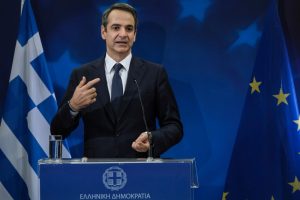
Greek Prime Minister Kyriakos Mitsotakis
Mitsotakis’s stance is informed by Greece’s successes with renewable energy integration, where the affordability of renewables has led to negative energy pricing. He suggests this is a tangible example of the economic viability of the Green Deal’s objectives.
He continued by recognising the need to segment the Green Deal’s agenda into three categories: mature technologies that can lead the market, those requiring subsidies to become effective, and emerging technologies where Europe can lead development.
Bill Gates called for increased financial contributions from the wealthiest to support the Global South, highlighting the disparity in resource allocation for crucial areas such as climate mitigation and adaptation.
He pointed out the shortfall in meeting the United Nations’ target for aid contributions, stressing the need for innovation to address the unique challenges faced by the Global South.
In summary
The WEF 2024 underscored the imperative of rebuilding trust across various spheres of global interaction. From the pressing need to resolve global conflicts to the cautious optimism surrounding AI and the economic rationale for a green transition, the forum highlighted the interconnectedness of these issues and the collective action required to address them.
The discussions at Davos underscored a consensus that AI is not mere hype but a real and impactful advancement. As the world stands on the cusp of an AI revolution, the message is clear: embrace the technology, foster talent, and collaborate internationally to harness AI’s full potential while navigating its challenges responsibly.