

‘You wouldn’t leave a child home alone’: Why AI agents need constant supervision
In the agentic era, Conviva CEO Keith Zubchevich argues the winners won’t be the fastest to deploy but the quickest to spot what breaks
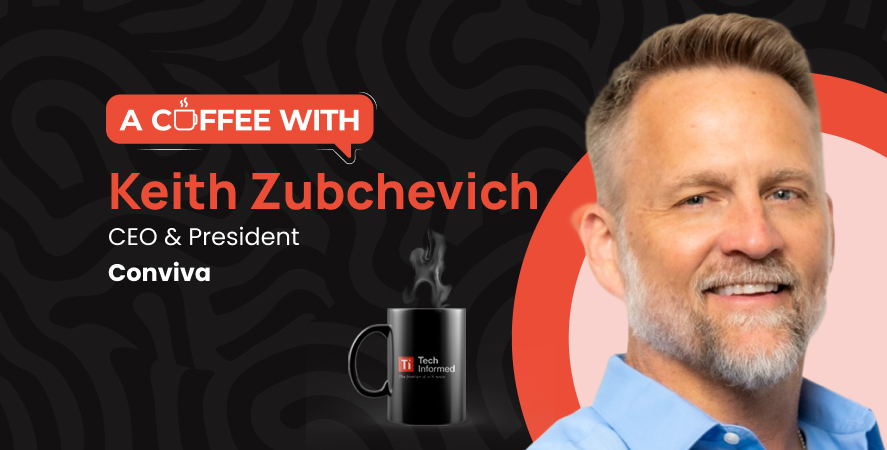
You wouldn’t leave a child home alone — so why are businesses deploying AI agents without watching what they do? This is the question Keith Zubchevich, CEO of Conviva, suggests executives sit with as they strategize for what’s next in consumer tech.
Founded in 2006 as a video streaming analytics platform, Conviva has since evolved into a full digital experience intelligence company — tracking audience engagement across websites, apps and AI agents. Its clients include everything from streaming providers using real-time data to monitor live broadcasts to retailers pinpointing exactly where a consumer drops off before completing a purchase.
Zubchevich draws a parallel between the early streaming boom and the current AI wave: success will not come from being first to launch, but from having the clearest understanding of the user experience.
In this discussion with TechInformed, the CEO explains what real-time consumer intelligence means in the agentic era, why every bad AI interaction is a hidden iceberg and why the smartest thing to do with AI right now is simply to start (carefully).
Tell me about your background before Conviva and how your role has evolved since joining.
I’ve always been in technology. Very early in my career, I fell into pre-revenue, IPO startup opportunities. Financially, it was a “wow, that’s a great idea,” so from that standpoint it was validated. But it also lit a fire in me to look for companies that are new and doing something that hadn’t been done before.
That was my challenge. I loved the ability to see a market and try to make something work that no one had proven yet.
It also meant picking the right startups. I’ve always prided myself on doing something new, disruptive and innovative, and also having some successful exits — really understanding whether a technology is going to change people’s lives or business.
At Conviva, I’ve now been here longer than anywhere else in my career — almost longer than the rest of my career combined. We’re now reinventing the company with AI, this whole wave hitting the technology market. I’ve effectively had the chance to do it twice: build the company around video, and now reinvent that value proposition in the world of AI.
What drove the shift from focusing on video to the broader digital experience?
It goes back to our original premise. Twenty years ago, we believed anything on the internet can be measured from the endpoint — from the consumer’s perspective, not internal systems.
We started with video, because quality had to be measured at the consumer level: what your eyes see, not what systems report. We built a massive sensor network with 8 billion sensors globally and became a key enabler of the streaming market.
We had to collect and process huge amounts of data in real time. If a stream buffers, publishers need to know instantly and fix it quickly.
From there, we expanded beyond video into the full digital experience: apps, products, everything. Now, with AI and agents, we see a similar shift. This is another major technology wave, and again, the key is measuring the consumer experience in real time.
Is deploying an agent like hiring a new employee?
100%. AI is only as smart as the data it has. Early on, people were buying datasets to train models. So if you launch an agent, it’s only as good as the data you feed it.
There’s a big distinction between internal workflow agents and consumer-facing agents. Internal ones rely on business data, but consumer-facing agents need to understand consumer behaviour, expectations and patterns — and those are constantly evolving.
That’s the challenge. Who’s providing that real-time consumer intelligence? That’s where we see our role.
How do you see the consumer experience evolving over the next year as AI agents become more common?
It’s going to be messy at first, just like video streaming was in the early days. But it’s not a question of if; it’s when. Everyone will deploy agents.
The key is accepting that they’ll make mistakes early on. The key is how quickly you detect and fix those mistakes in real time.
You wouldn’t leave a child home alone — you monitor, guide and help them learn. It’s the same with AI agents.
The winners will be the ones who can see issues faster and fix them faster. That becomes a competitive advantage, just like it did in the streaming wars.
Many people are already having mixed experiences with consumer AI. How should businesses think about that?
It’s like an iceberg. For every good experience, there are bad ones underneath.
The key question is: do you know which is happening? Are you reinforcing the good experiences and fixing the bad ones?
One positive experience doesn’t mean everything is working. You need visibility across all users.
What does a ‘bad experience’ actually look like beneath the surface — and what patterns do you see most often?
We’re in an attention economy. People have limited time. If your experience is slow or frustrating, they won’t come back.
In digital experiences, we’ve seen things like users dropping off during checkout due to complexity, and a betting flow where a small step caused revenue to drop.
These weren’t technical failures, they were experience issues. Adding a video tutorial at a key moment, for example, significantly improved engagement.
Understanding the full consumer journey is critical. Even something like a difficult returns process affects future purchases and brand perception.
How do you personally use AI in your day-to-day work?
It’s one of the biggest productivity advances we’ve ever seen and comparable to the personal computer. I use it for summarizing, structuring and writing.
What advice would you give to businesses that want to start using AI but don’t know where to begin?
Just start. Learn how to prompt, how to ask questions and refine outputs. That’s the foundation.
If you’re deploying AI in your business, make sure you monitor everything. Put guardrails in place, watch every interaction and continuously adjust.
Everyone is learning in real time right now.
It can feel like a big leap to deploy consumer-facing AI. How should businesses approach that?
It is a big step, but it’s inevitable.
Businesses will have to adopt consumer-facing agents or fall behind. It’s similar to the shift to streaming: you couldn’t ignore it.
The key is measuring from the consumer’s perspective, not internally. That’s how you succeed in a major technology shift.