
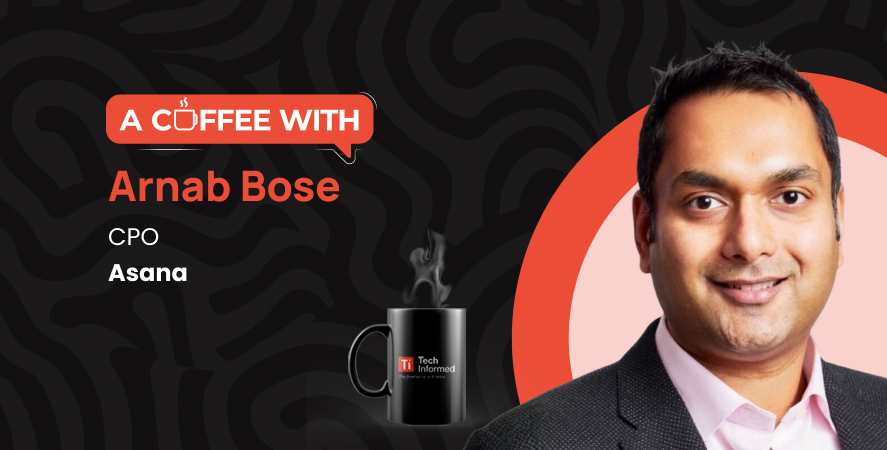
Asana CPO Arnab Bose: AI agents stall in single-player mode
AI saves individuals time but creates review work for teams, says Asana Chief Product Officer Arnab Bose. Agents need shared context and memory to pay off
A marketing manager hands the fall/winter line to an AI agent on Monday afternoon. By Tuesday morning, the copy and visuals for every item is ready to go, sized for the website and for stores. The marketing manager told it what they wanted over a dozen prompts, corrected it twice and approved the result. Nobody else saw any of that.
The brand team gets one finished output and no way to tell why it reads the way it does, or where feedback should go. A colleague’s agent, briefed from different notes, has produced a second set for the same products. Someone has to check every line against the brand voice — and whatever they fix, the agent won’t remember next season.
The time the agent saved one person has been spent by everyone else.
Arnab Bose thinks this is why agentic AI isn’t paying off for most companies. “The core problem is that most agents operate in single-player mode,” the Asana chief product officer tells TechInformed. “They respond to you as an individual.”
The data agree: according to Glean’s Work AI Index 2026, workers save about 11 hours a week with AI, then spend 6.4 hours managing it.
Bose has spent more than two decades on the software that sits between people at work: nearly a decade on Microsoft Office, then product leadership at Salesforce, then six years at identity and access management firm Okta, where he rose to chief product officer. He took the same title at Asana in September 2025.
Asana has moved fast since. Nine days after he started, it put its first AI Teammates — agents that can be assigned work like any other team member — into beta. In May, it bought no-code agent builder StackAI for a reported $75 million. In June, it recast itself as “the operating system for human-agent teams,” and by September it had shipped three new applications for service, engineering and agency teams. Rivals including Atlassian, monday.com and ServiceNow are chasing the same buyers with their own agents.
Over a coffee, Bose tells TechInformed why reviewing AI output has become its own job, what changes when agents share a team’s context and how he uses AI himself.
Are industries like retail becoming more like technology companies?
It’s been happening for almost a decade. Since the mid-2010s, as more interactions went digital, even brick-and-mortar brands needed a serious digital presence, plus logistics and supplier management running on cloud and SaaS products.
What’s new with AI is that workflows where people took content from one place, applied judgment, checked quality and passed it on can now be supercharged. You can zoom out and reimagine the workflow for an agentic enterprise. Which steps no longer need a human? Where do you apply your human capital to gain an edge, improve the customer experience or cut costs? That reimagining is where we are now.
Who adopts AI most easily: a company that is already deep into emerging technologies, but may be tangled in different vendors, or one starting fresh?
Nobody has used it for very long. Agents have been mainstream for about a year, and large language models for about four. Almost everyone is at an early stage, and that’s what’s fascinating. It’s a chat window. You talk to it like a person, and it’s as easy to start with as Google search. It’s pretty democratized.
The challenge is that using AI to improve end-to-end workflows means reimagining them, and most companies haven’t done that, including tech companies.
Today, people use AI for individual productivity, like turning a few bullet points into a five-page brief. But if you’re generating reams of content, 100-slide decks or masses of code, people still have to check it meets the quality bar, the brand voice and the message you want to get across. More content can actually slow you down.
How can companies stuck reviewing their outputs become more productive?
The core problem is that most agents operate in single-player mode. They respond to you as an individual. When you share the output, colleagues may duplicate work, work at cross purposes or make inconsistent decisions.
Coordination has always been a problem, even before AI. You’re aligning people on goals, and those goals on a portfolio of projects run by many teams. A consistent project map showing who is doing what, by when and how is the substrate AI agents need.
Take launching a fall/winter line in retail. The goal is to grow revenue by a certain percentage, which means copy and visuals for every item, online and in stores. Even if an agent generates that material, the prompts and back-and-forth should be visible to multiple people, who can shape it and approve it, rather than everyone being confused about one final output and how to give feedback.
That’s busy work, and having AI take a first crack at it is a good idea. The unlock comes when several people can check its work, give feedback, and it remembers going forward.
How does a team-led AI help tackle shadow AI and poor-quality AI?
If employees use an AI tool off to the side, ask why. Maybe they haven’t been given the right tools. If AI is embedded in the workflows where they already manage campaigns and launch plans, they have less need to go elsewhere.
The second layer is the multiplayer experience. If some colleagues aren’t AI-fluent, the prompt doesn’t have to be great. An agent should be able to see who is on the project, how similar tasks were completed in the past and what the attachments looked like, so it picks up style and tone. Even a terse prompt should come with plenty of context.
How do you use AI in your daily work and personal life?
I use it as a thought partner and a project manager. It stays abreast of our strategy changes and of customer and analyst feedback. We use it for a first pass on proposals, specs and launch plans. It knows I always ask whether something has been security-reviewed or run past privacy and legal, so it flags those gaps and teams can fix them before final review. The idea isn’t to outsource critical thinking.
For project management, status updates pour in, and a launch needs code, QA, legal and privacy reviews, marketing copy and sales enablement all on track. Spotting what’s slipping is time-consuming. AI can scan many threads and say a project is yellow trending red because one long pole has slipped for weeks with no remediation plan. That might be buried in a comment thread or a Slack post, and the job is to flag it so leadership can step in.
How do you have your coffee?
A macchiato, usually, with a bit of oat milk.
This interview has been edited for clarity and length.