

SolarWinds CTO: AI moves IT work, but it doesn’t remove it
Krishna Sai explains why AI amplifies weak systems and bad data, how IT teams learn to trust algorithms and why task speed is the wrong metric
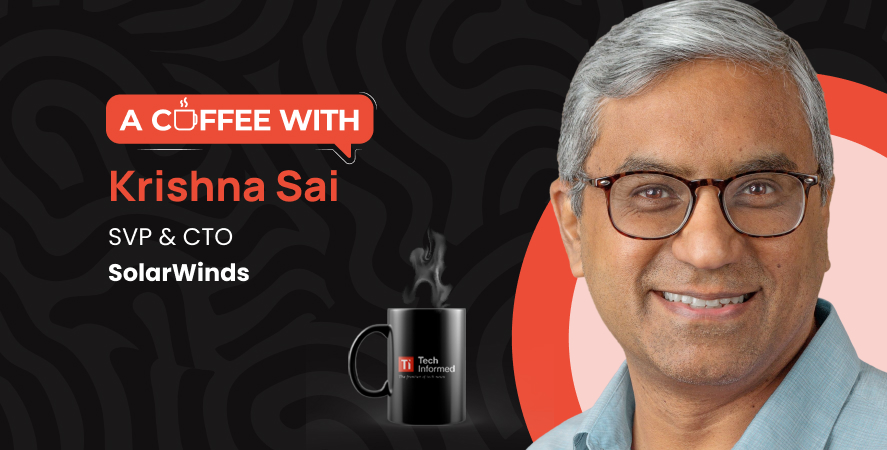
If one word defines an IT professional’s working days, Krishna Sai says, it is toil: assembling data, chasing alerts, repeating the same fixes. AI promises to take that away. Sai, senior vice president and chief technology officer of SolarWinds, says it isn’t that simple.
AI doesn’t make the work disappear, he argues. It moves it — from investigating problems to verifying and governing the agents that do the investigating — and it multiplies whatever a company already has, good or bad. Organizations with brittle systems and poor-quality data will get more of the same, while those with solid foundations will see the benefit.
Sai joined the IT management software maker in June 2021, when, he says, its tools worked as separate point products. Bringing them onto a single platform with the data in one place laid the groundwork for layering AI across the suite.
It was work his career had prepared him for: He cofounded and served as CTO of two startups and held engineering leadership roles at Polycom, Groupon and Atlassian.
Over coffee, Sai tells TechInformed how IT teams can build trust in AI agents, why speed is the wrong measure of productivity and why running AI in a real enterprise is less like driving a Ferrari down an empty Montana road than through a New York City logjam.
Has AI made IT simpler or more complex?
The jury is still out on that one, but it is definitely changing things.
The biggest shift is that AI does two things very well. One, it raises the level of abstraction. Everything moves up to a higher level than where you typically operate.
The second is that it multiplies whatever you have. If you have poor, brittle systems and poor-quality data, AI tends to multiply that. If you have thoughtful system design, good data boundaries and sovereignty, then it tends to have the right effect.
In IT, we think about it as helping people operate at a higher level. It’s not that people suddenly have dramatically less work to do. Instead, their time shifts away from assembling data, chasing alerts and repetitive work, and toward making higher-level decisions.
A good example is a retailer whose checkout systems slow down. Traditionally, the network engineer goes through multiple tools, looks at network traffic, application performance and device telemetry, then tries to piece it all together and identify the root cause.
With an AI agent, a lot of that investigative work can be automated. It can detect the slowdown, correlate it to a network issue, a backup job that suddenly kicked off or some other signal. If you have the right controls in place, it can even automate parts of the response.
That changes the engineer’s role. Instead of spending most of their time going through logs, metrics, traces and alerts, they can focus on more proactive work like protecting payment traffic during peak periods or planning capacity using predictive models.
I’ve said this many times: if there’s one word that defines a typical IT and ops professional’s day, it’s toil. If AI can offload some of that toil, it can have immediate benefits.
How do IT teams come to trust AI?
Everyone is comfortable asking questions of AI. We can chat with AI all day long. But what do you need to put in place for an IT team to allow AI to act in your environment?
There are a few things that matter.
One is autonomy. Can you define different levels of autonomy so you can start small with a narrowly scoped problem in a narrowly scoped environment?
I often use the example of self-driving in a Tesla. It has different autonomy modes: chill mode, standard mode, hurry mode and Mad Max mode. Organizations don’t jump into Mad Max mode on day one.
You start with something highly defined. For example, disk space management. A lot of time goes into rotating logs, creating backups and freeing up disk space. You can begin with small tasks and build trust gradually.
The second challenge is determinism. AI is a probabilistic system. Ask a language model the same thing three times and you may get three different answers.
That’s why pairing AI with established IT and ops systems is important.
You also need good context, permission levels, evaluation systems, containment, observability of the agent itself, verification processes and escalation paths. All of those things contribute to building trust.
What happens when teams spend more time managing AI than it saves?
This is the so-called AI productivity paradox.
A lot of it comes down to how you’re measuring productivity and at what layer you’re measuring it.
AI can make individual tasks dramatically faster. It can summarize an incident or correlate telemetry quickly. But IT doesn’t operate as individual tasks. There is a workflow around how these tasks come together to achieve a business outcome.
If you’re only measuring individual tasks, you’ll see impressive improvements. But if you haven’t thought through the whole workflow and how AI fits into it, you’ll struggle to realize broader productivity gains.
One of my engineers, for example, used AI to work through huge volumes of log data much faster, but then had to spend time verifying the insights it generated.
The work shifts rather than disappears.
That’s why you should measure productivity at the level of verified outcomes. For example: reducing alert noise, reducing total effort or reducing incident frequency. Those metrics matter more than how fast AI can summarize a log file.
How can organizations avoid creating security and governance problems with AI?
What typically happens is that everyone gets excited about AI and starts buying the latest AI tool for their function. Then, instead of traditional IT tool sprawl, you get AI tool sprawl.
It’s important to take a step back and look at your enterprise AI stack.
Are you creating another layer of tool sprawl? Are you chasing the latest shiny models? Or are you putting the fundamentals in place around controls, policies and data governance?
We have a unified AI gateway that all of our AI tools leverage. It gives teams flexibility in model choice while also providing auditing, cost controls and safeguards to prevent things like sensitive data leakage.
Experimentation is important, but scaling AI across an organization requires thought. People often point to examples of companies moving 15 times faster and ask why they can’t do the same.
I use the analogy of driving a Ferrari. If you’re driving on an empty road in Montana, you’ll get incredible performance. But try driving that same Ferrari through New York City, Jakarta or Bangalore and you’ll have a completely different experience.
The model itself may be powerful, but real-world environments require additional infrastructure, governance and controls around it.
How do you use AI in your own life?
One of my favorites is around learning. I have a backlog of topics I’m curious about, whether it’s a new AI model, a customer I’m about to meet or something completely unrelated. I’m a neuroscience geek, so I read a lot about neuroscience too.
I have an agent that takes those topics and converts them into podcasts that I can listen to while driving. Every day I get a personally curated podcast automatically generated based on my interests.
How do you take your coffee?
I grew up in the south of India, so I have South Indian filter coffee. It’s like a strong and hot brew, and a layer of froth. It comes in a special kind of two-piece metal container, and there’s a whole ritual that goes with it.
This interview has been edited for length and clarity.